The formula is criminally simple: Take something old. Add “limited edition.” Watch grown adults weep into their wallets.
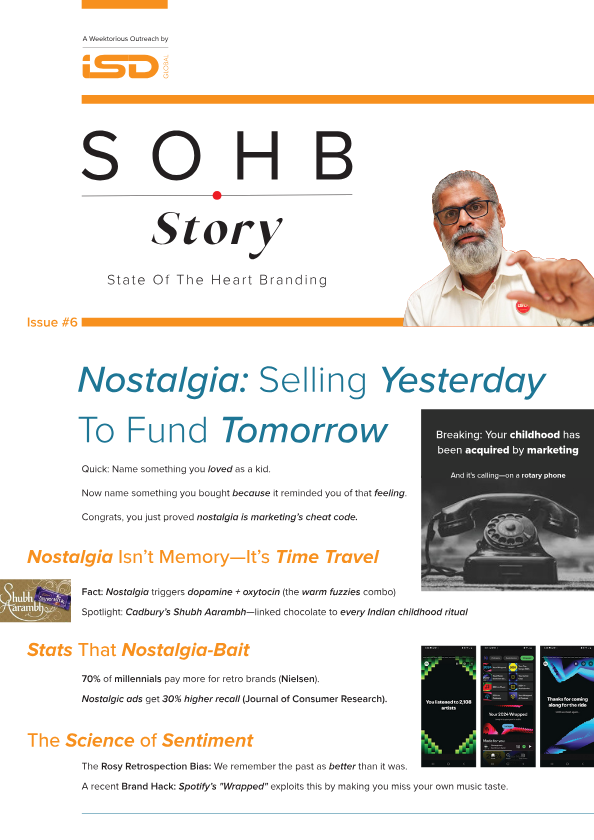
What’s the scent of your childhood? For millions, it’s not monsoon soil. It’s the plastic-and-promise aroma of a new G.I. Joe, the saccharine haze of a melting Kwality Wall’s, or the electric fizz of a Campa Cola. They aren’t selling you a product. They’re selling you a time machine. And the fare is your wallet.
Why does a 40-year-old with arthritic knees and a cynical heart get misty-eyed over a cheesy jingle? Because nostalgia isn’t memory. It’s pain-free memory. Brands aren’t archaeologists; they’re editors. They curate our past, airbrush the crappy parts, and sell back the highlight reel. The genius? We pay a premium to feel poor again. Ironic, no?
Hollywood’s a broken record. Star Wars isn’t a saga; it’s a heritage asset. Netflix resurrects Stranger Things like a cultural necromancer. And Nintendo? They’ve repackaged the same 8-bit Mario for four decades. We don’t just buy it; we thank them for the privilege of our own déjà vu.
The Science of Sentiment Selling
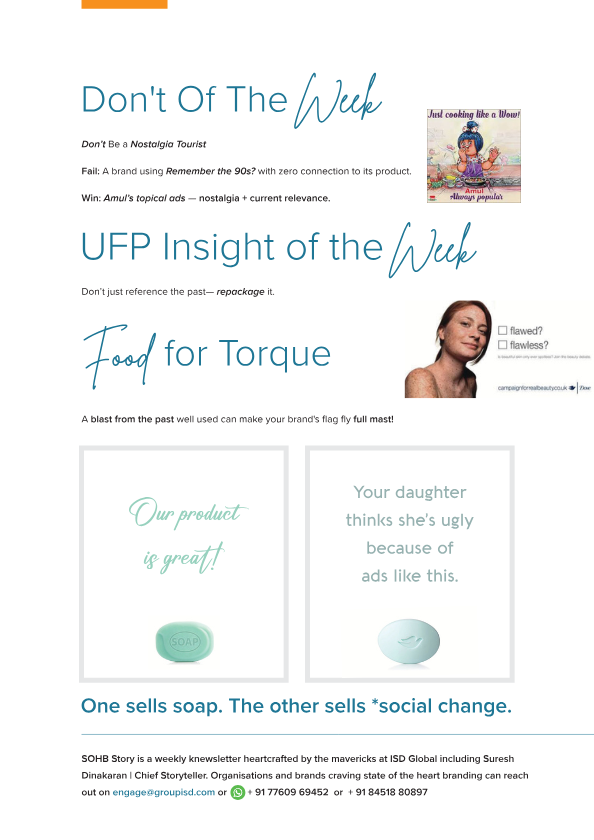
Nike re-released the Air Jordan 1s fifty-three times. Not because they ran out of ideas—because they ran the numbers. Levi’s “501 Original” campaign doesn’t sell jeans; it sells your dad’s rebellion. Apple’s retro rainbow logo appears on limited merch, reminding you when computers were magical, not just necessary.
Even Cadbury brought back their 1990s “Kuch Meetha Ho Jaaye” positioning, knowing that Indians don’t just buy chocolate—we buy moments we want back.
Truth be told: Brands aren’t preserving your memories. They’re strip-mining them for profit.
The Paradox
The greatest irony? We’re using tomorrow’s technology to consume yesterday’s dreams. Streaming services filled with shows about the past. Instagram filters that make 2024 look like 1974. Spotify playlists titled “Old Songs Only.”
We’re not moving forward. We’re moonwalking into the future.
Nostalgia isn’t memory; it’s a mortgage on your feels, paying for tomorrow’s R&D.
The Emotional ATM for Brands
Ever wonder why Fevicol’s “Dum Laga Ke Haisha” ad glues you? It’s yesterday’s bhangra buying quantum computing tomorrow. Irreverent truth: Nostalgia’s the ultimate grift—free tears, premium ROI.
The Replay Button Hack
Why do reboots outsell originals? Because your brain is a lazy DJ, spinning ’80s synths to fund Marvel’s multiverse. Stranger Things revives Eggo waffles—sales spike 200%. Indian twist: Mirzapur Season 3 drops, and suddenly every chai stall’s hawking “Munna Bhaiya” banarasi paan. Hook: What if your childhood crush funded Elon’s Mars shot?
The Yesterday Industrial Complex
Nintendo’s selling you the same Mario you played in 1985—now on a Switch. Stranger Things made us nostalgic for a decade most of us hated living through.
In India, Amul’s mastered this dark art for decades. Same girl. Same polka dots. Same font since 1966. They’re not selling butter—they’re selling your childhood breakfast table. Britannia brings back “Good Day” memories with the same jingle that made your grandmother smile. Bajaj recently resurrected the Chetak scooter as an electric vehicle, banking on the tears of every middle-class family’s Sunday drives.
Why does this work?
Because nostalgia is the only time machine that comes with a Buy Now button.
Nostalgia’s Alchemy: Global Heists
Coca-Cola dusts off Santa Claus—holiday sales: $10B. Levi’s 501s whisper “rebel youth” to Gen Z wallets.
The Wake Up Call
Nostalgia is comfort food for the anxious soul. But here’s the thing about comfort food—consume too much, and you stop growing.
Smart brands know this. They don’t just mine the past; they remix it. They ask: What if we took what worked yesterday and rebuilt it for who we’re becoming tomorrow?
Because the real magic isn’t in selling yesterday.
It’s in reminding people that the feelings they’re chasing—joy, simplicity, connection—don’t require a time machine.
They require presence.